Share .ics files
Send an ICS file as a link, not an attachment
Drop your .ics file, name the link and send it. They download the original in one click — no attachment limit, no shared-drive permissions, nothing converted along the way.
- One-click download of the untouched original
- No attachment limit, no 'request access'
- Replace it later and the same link shows the new version
Drop the ICS file you want to share
Any other file works too — up to 25.0 MB, or 100.0 MB for a whole site
Why share a ICS file as a link?
Small text files are the ones people paste into chat — and pasting mangles them: long lines wrap, whitespace collapses, and structured data stops being valid. A link to the file keeps it byte-for-byte, lets the reader view it in the browser, and gives anything that can fetch a URL something to fetch.
Usually you'd be sending it to a colleague, an integration partner, a tool that needs a URL, or someone debugging with you. They don't need an account, and you don't need to know which app or device they'll open it on.
Message
just now
Here's the ICS file 👇
Tap to download the original
Got it, opened fine on my phone 👍
On their side
What the person you send it to sees
They tap the link and the .ics file (iCalendar event) downloads straight away, exactly as you uploaded it, ready to open in Google Calendar or whatever they use for .ics files.
What they need
- Google Calendar, Outlook and Apple Calendar
- Thunderbird and every desktop calendar
- Every phone's built-in calendar app
- No account — the download starts from the link
Sending a ICS file: link vs. the usual ways
What happens to a .ics file when you email it, drop it in a chat or put it in a cloud drive — and what changes when you send a link instead.
Email attachment
Most mail providers cap attachments at roughly 20–25 MB, and every revision means another email.
Chat app
Pasted text wraps and loses whitespace, and big pastes get cut off or turned into a snippet nobody opens.
Cloud drive
Drives often won't preview these formats, and their links point at a viewer page, not the raw file a tool can use.
A 99helpers link
The original file, byte for byte, at a link you choose. Password it, see how often it's opened, and replace it at the same link whenever you need to.
Sharing takes about ten seconds
- 1
Drop it
Drag your .ics file onto the box, or pick it from your computer or phone.
- 2
Name the link
Choose the words: q3-report.99helpers.site reads better than a random string.
- 3
Send it anywhere
Paste the link into an email, a chat, a document, a bio or a QR code.
When people share text and data files like this
Debugging together
Share a log or a config file in full instead of a truncated paste.
Giving a tool a URL
Many apps want a link to a feed, a calendar or a data file — now you have one.
Sending notes
Share Markdown or plain text that reads cleanly on any device.
Publishing a small dataset
Give people a stable address to download or import from.
What people send .ics files for
- Event invitations shared from a web page
- Conference and webinar schedules
- Class timetables and team rotas
- Add-to-calendar links in emails and landing pages
Before you share your ICS file
- Strip out passwords, tokens and personal data — config files and logs often contain them.
- Save it as UTF-8 so accents and symbols survive.
- Validate structured files (JSON, YAML, XML) before sending, so the link isn't to a broken file.
- Pick a short, descriptive address — it's what people will paste into their tools.
Sending the link isn't the end of it
An attachment is gone the moment you press send. A link is still yours: you decide who can open it, what it shows and how long it stays.
Fix it after sending
Upload a corrected version to the same link. Everyone who has it sees the new one; old versions are kept.
Keep it private
Add a password so only the people you give it to can open the link.
Know it was opened
See how many times the link has been visited, so you're not left wondering.
Take it back
Delete it and the link stops working — something you can't do with an email attachment.
Sharing ICS files: questions
How do I share a .ics file?+
Drop it on this page, choose the words for your link, and publish. You get an address like your-name.99helpers.site to paste into an email, a chat, a document or a QR code. Whoever clicks it gets the file as a download.
Does the person I send it to need an account?+
No account is needed. They click the link and the file downloads; to open it they'll need Google Calendar or another app that reads .ics files.
Can I share an ICS file privately?+
Yes. Add a password when you publish and only people you give it to can open the link. You can also ask for a name and email before the file is shown.
What if I need to change the file after sending the link?+
Upload the new version to the same address. Everyone who has the link gets the update, and the previous versions are kept in case you need one back.
Can I share several ICS files at once?+
Yes. Drop a folder or a .zip instead of a single file and everything goes out under one link, each file at its own address inside it. How much you can upload depends on your plan — the limits are on the pricing page.
Can an app or script use the link directly?+
Yes. The link serves the raw file with the right content type, so it works anywhere a URL to a data file is expected.
Will long lines and special characters survive?+
Yes. The file is stored and served exactly as uploaded; nothing is reflowed, trimmed or re-encoded.
Sharing something else?
Want it online for good?
If the file should stay at a permanent public address — a download page, an embed, part of a site — see host an ICS calendar file.
Start from a template
No file ready? Publish one of these as your own in a click — then replace the words with yours.
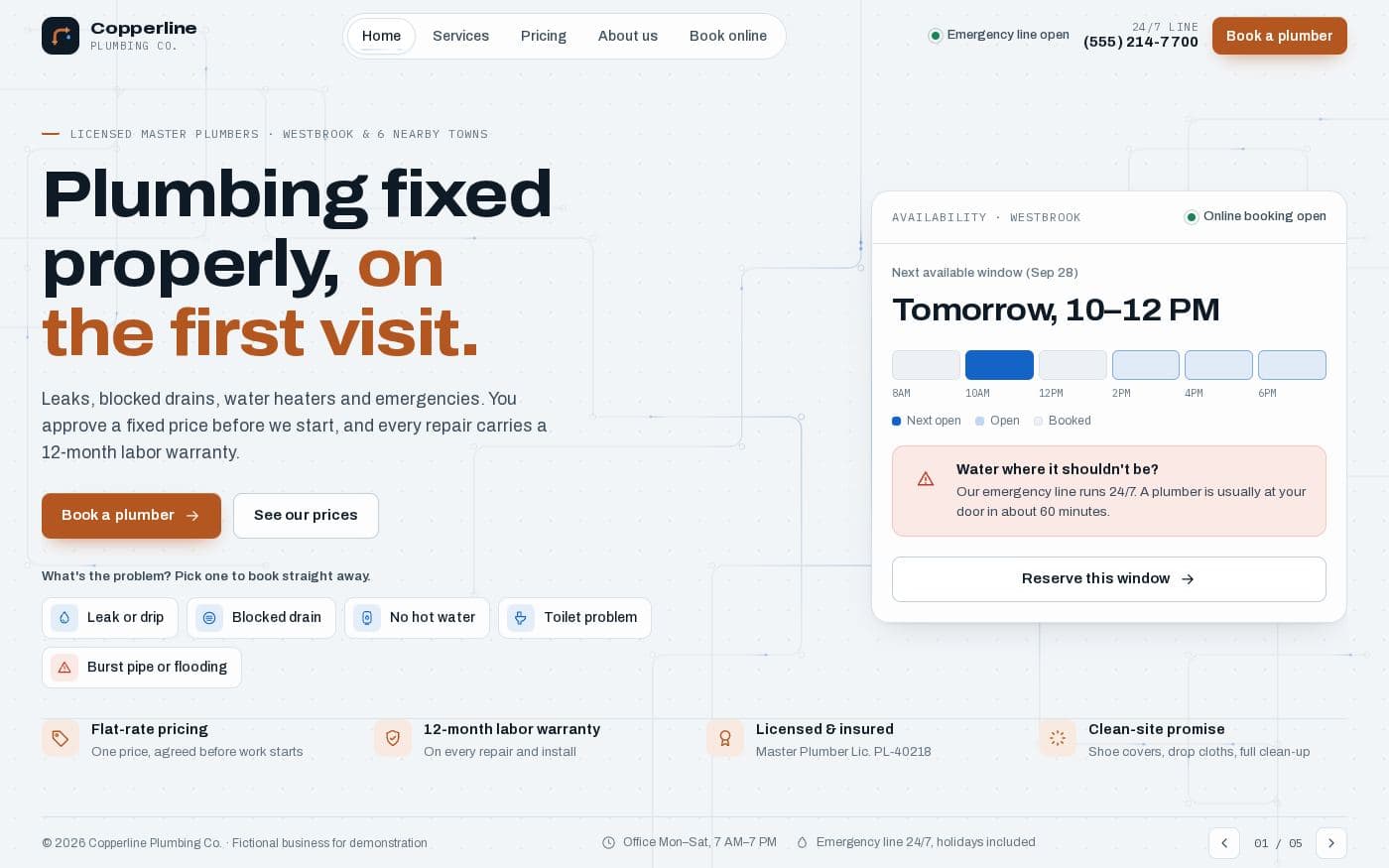 Small business81.3 KB
Copperline plumbing website
A complete small-business website in one file: services, flat-rate prices with an estimator, a service-area map and a booking flow.
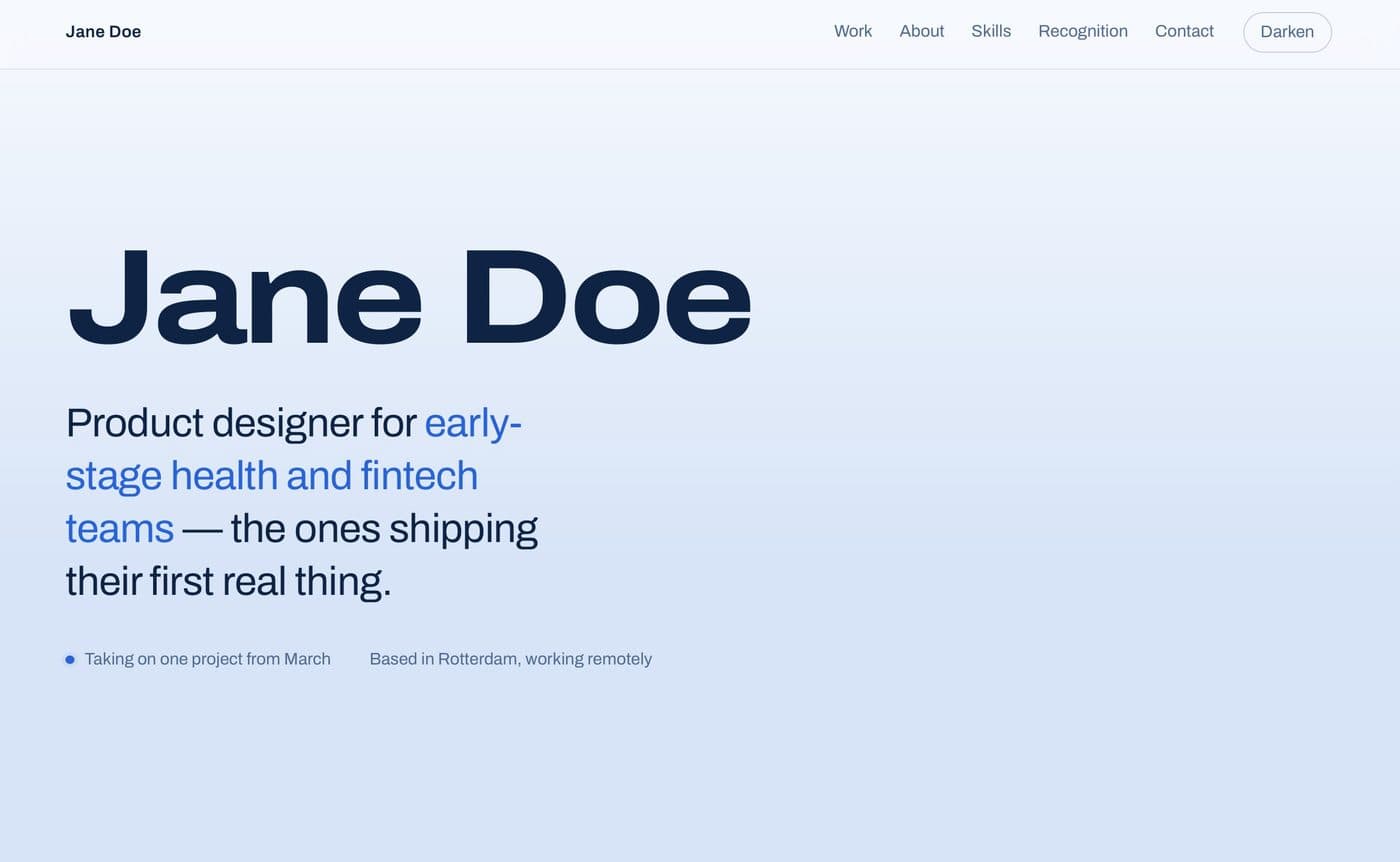 Portfolio24.4 KB
Portfolio one-pager
One page for your work — case studies with outcomes, skills and contact, and a light/dark switch.
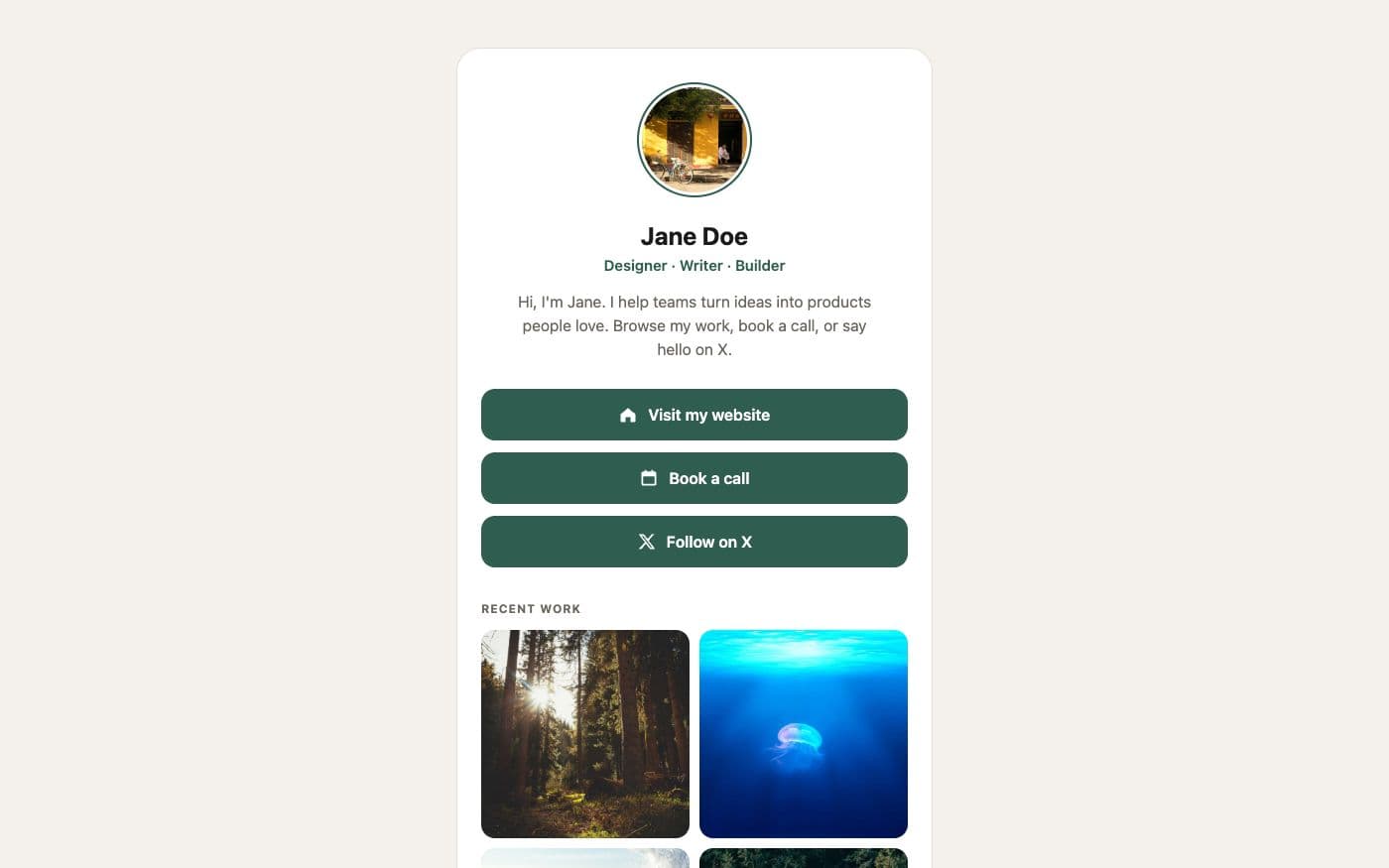 Link in bio4 files
Personal link page
A friendly card with your photo, three big buttons and a small gallery — the classic link-in-bio, without the subscription.
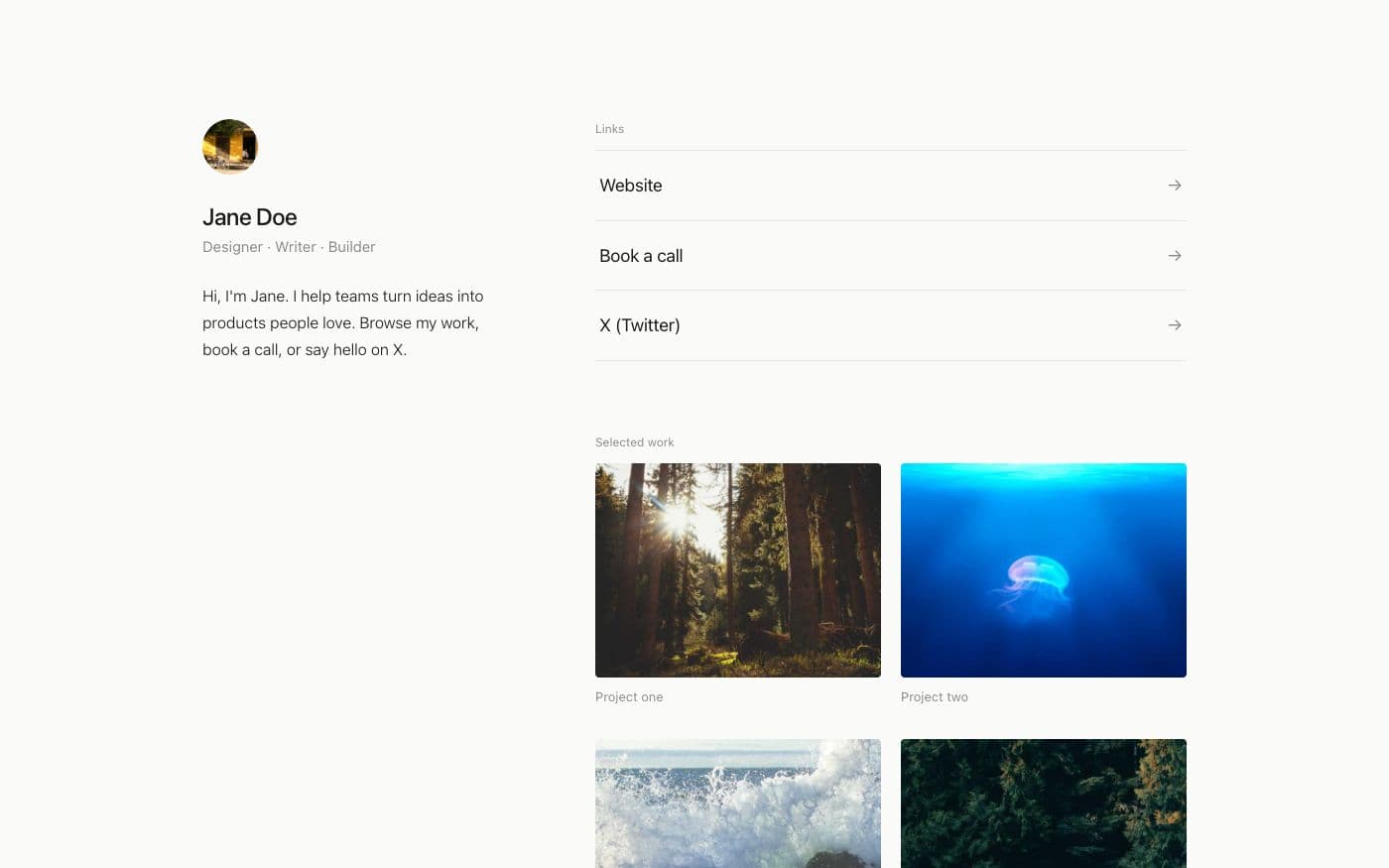 Link in bio4 files
Minimal link page
Whitespace, hairlines and one typeface. Links as quiet rows, work as a small grid — nothing else.
 Link in bio4 files
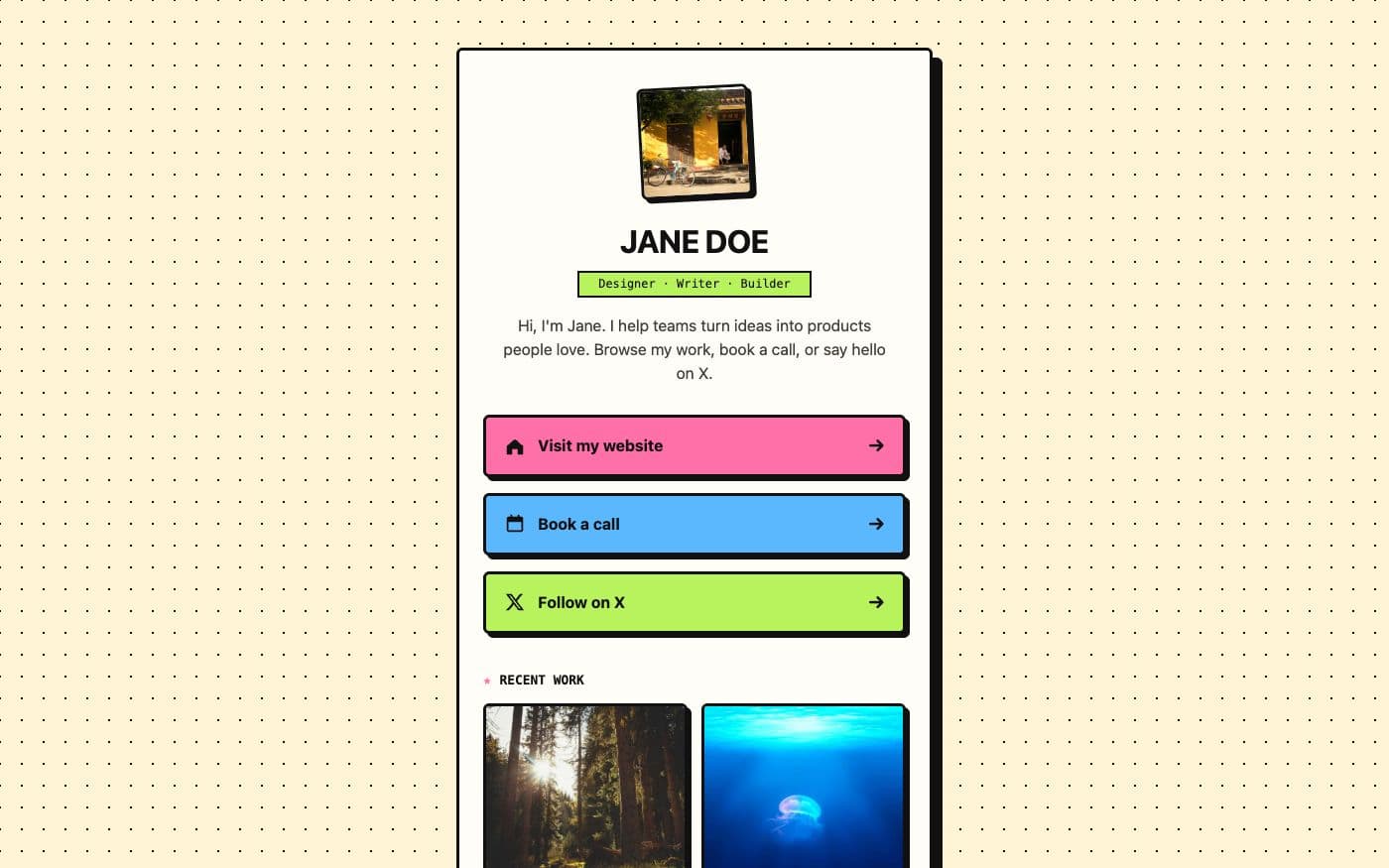
Bold link page
Thick outlines, hard shadows and three colour-blocked buttons that press down when you click them.
 Link in bio4 files
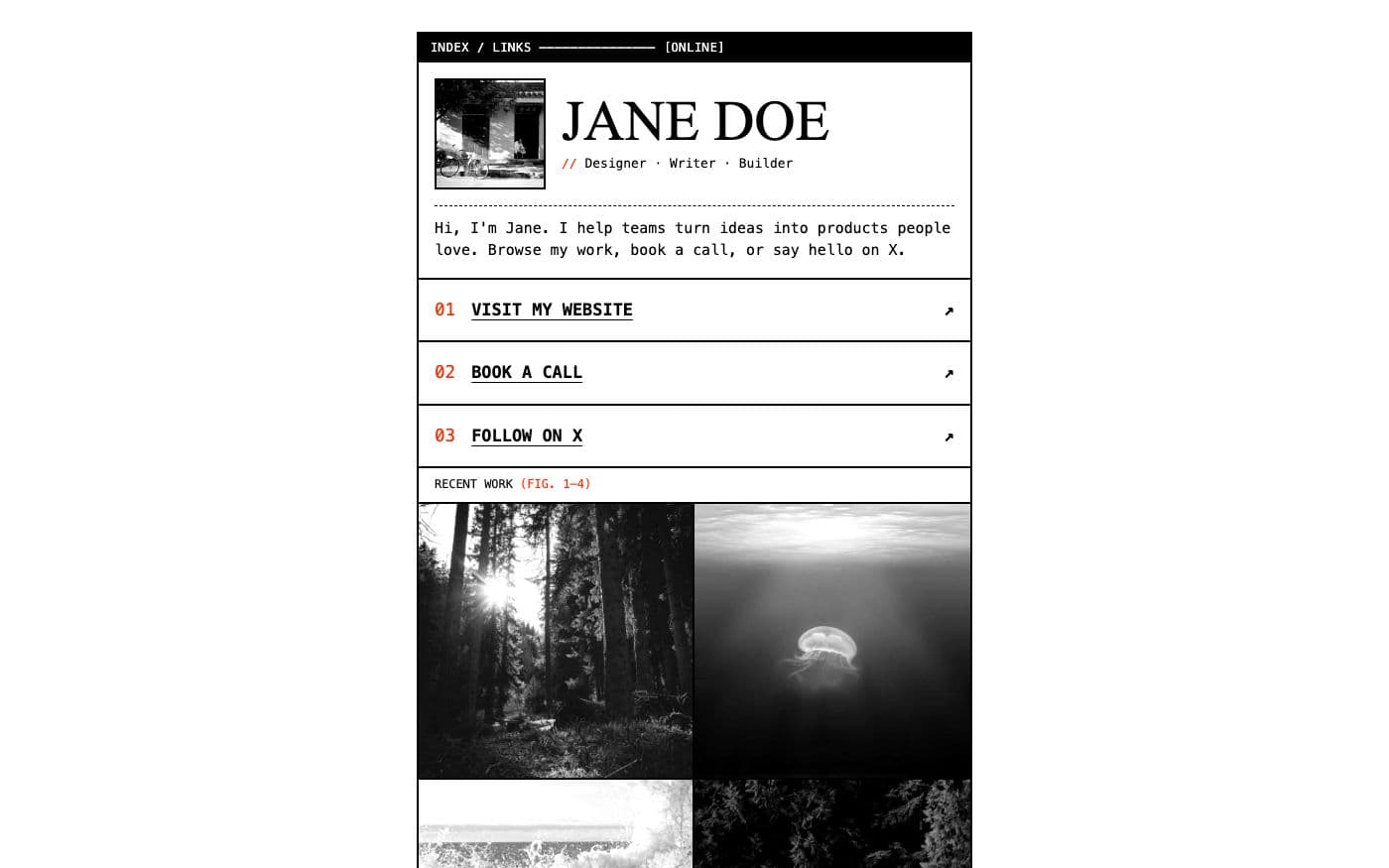
Brutalist link page
Black rules, system monospace, numbered links and greyscale photos that turn to colour on hover.
 Link in bio68.5 KB
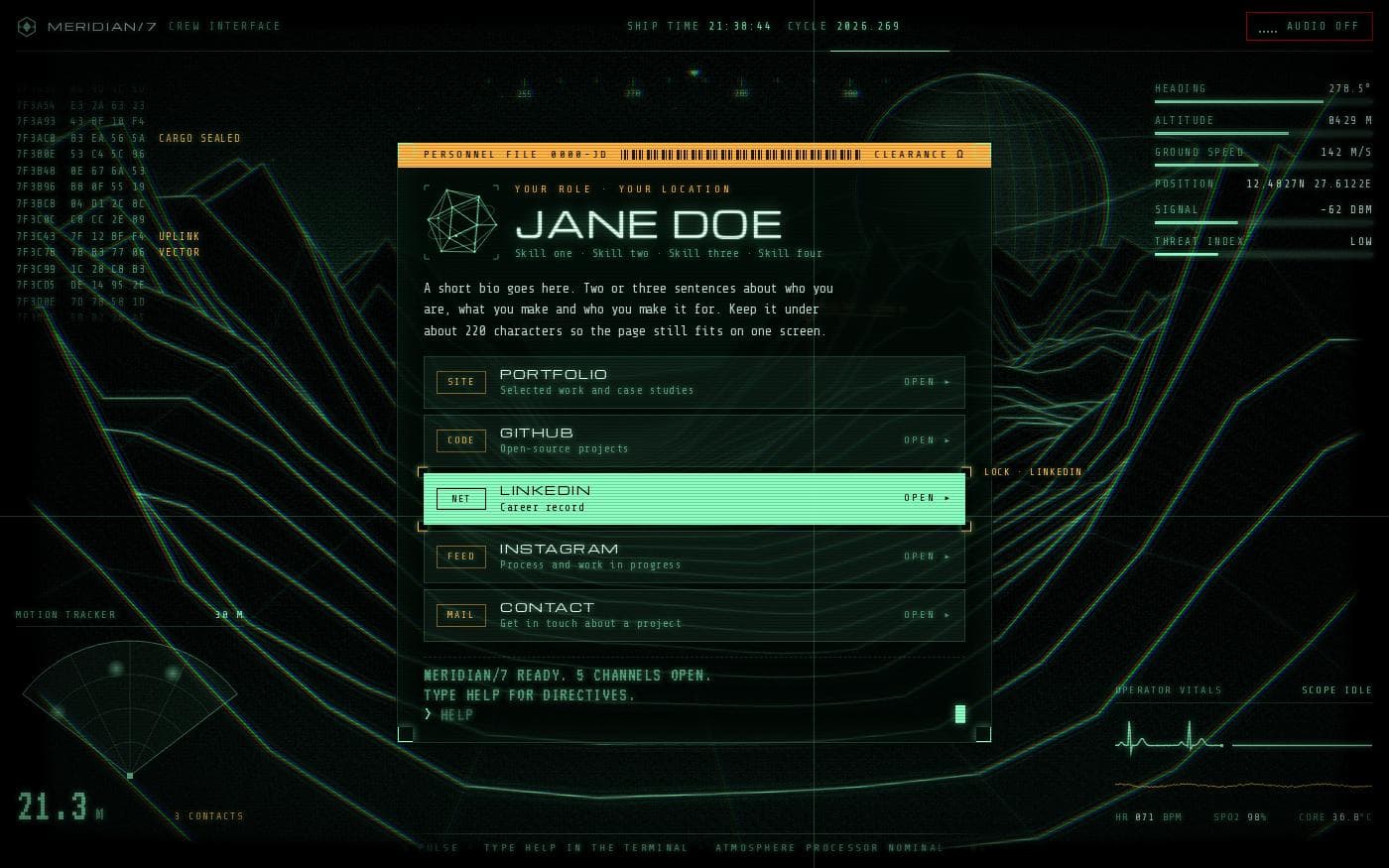
Meridian sci-fi bio page
Your links as a starship crew terminal: a boot sequence, a wireframe landscape, a motion tracker and a command line that answers back.
 Link in bio102.3 KB
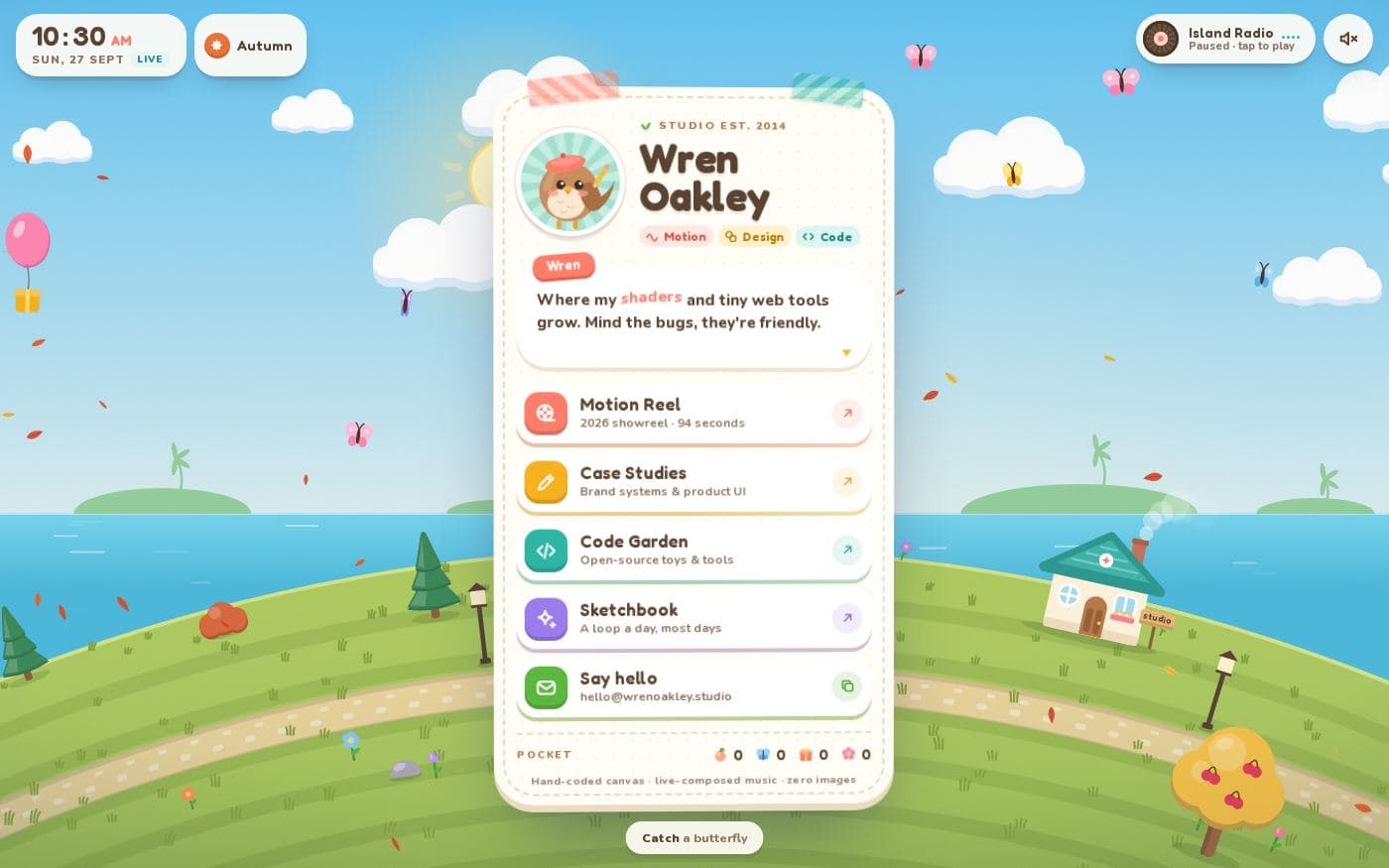
Wren's Island cozy bio page
Your links on a tiny living island: seasons, day and night, butterflies to catch, trees to shake and a radio that composes its own music.
 Link in bio65.0 KB
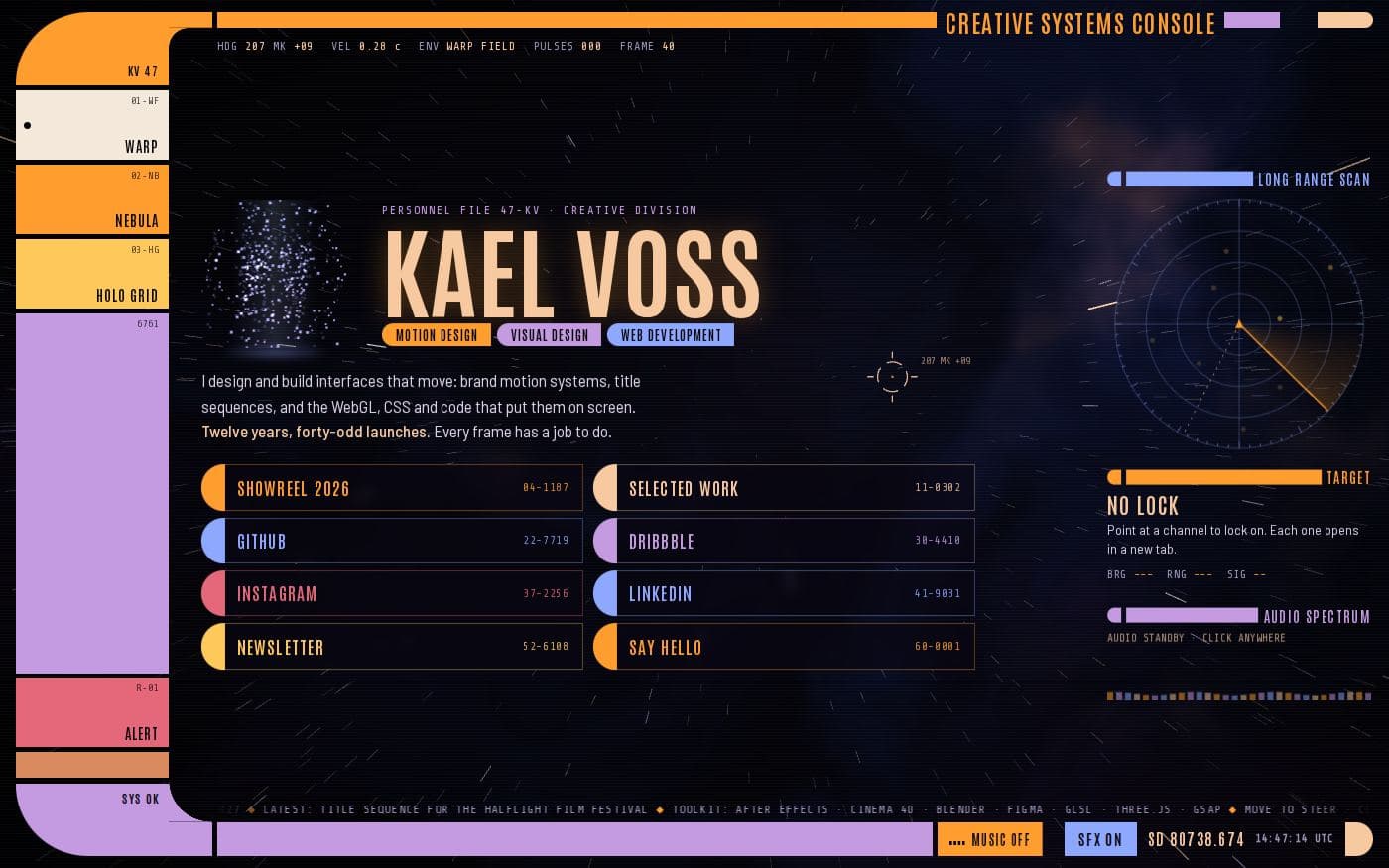
Kael Voss console bio page
Your links on a starship bridge console: three flyable space scenes, a hologram portrait, a radar that locks on to links and its own ambient score.
 Link in bio45.5 KB
Lio Maren motion designer bio page
A link page laid out like an animation timeline: every link is a layer with keyframes, over a live shader you can switch between three looks.
 Link in bio46.4 KB
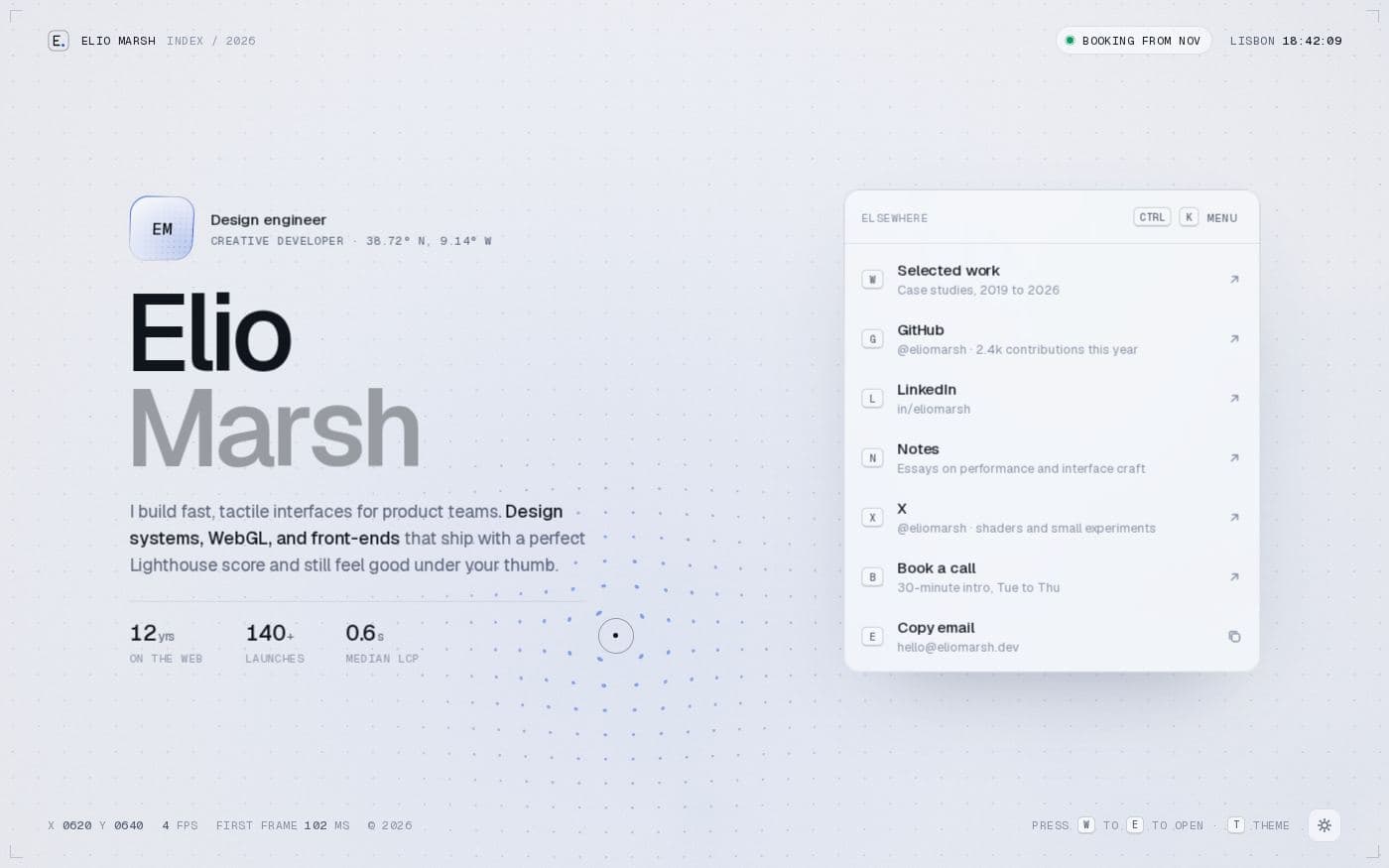
Elio Marsh design engineer bio page
A crisp, keyboard-first link page: a letter for every link, a command menu, light and dark themes and a subtle WebGL field.
 Link in bio43.0 KB
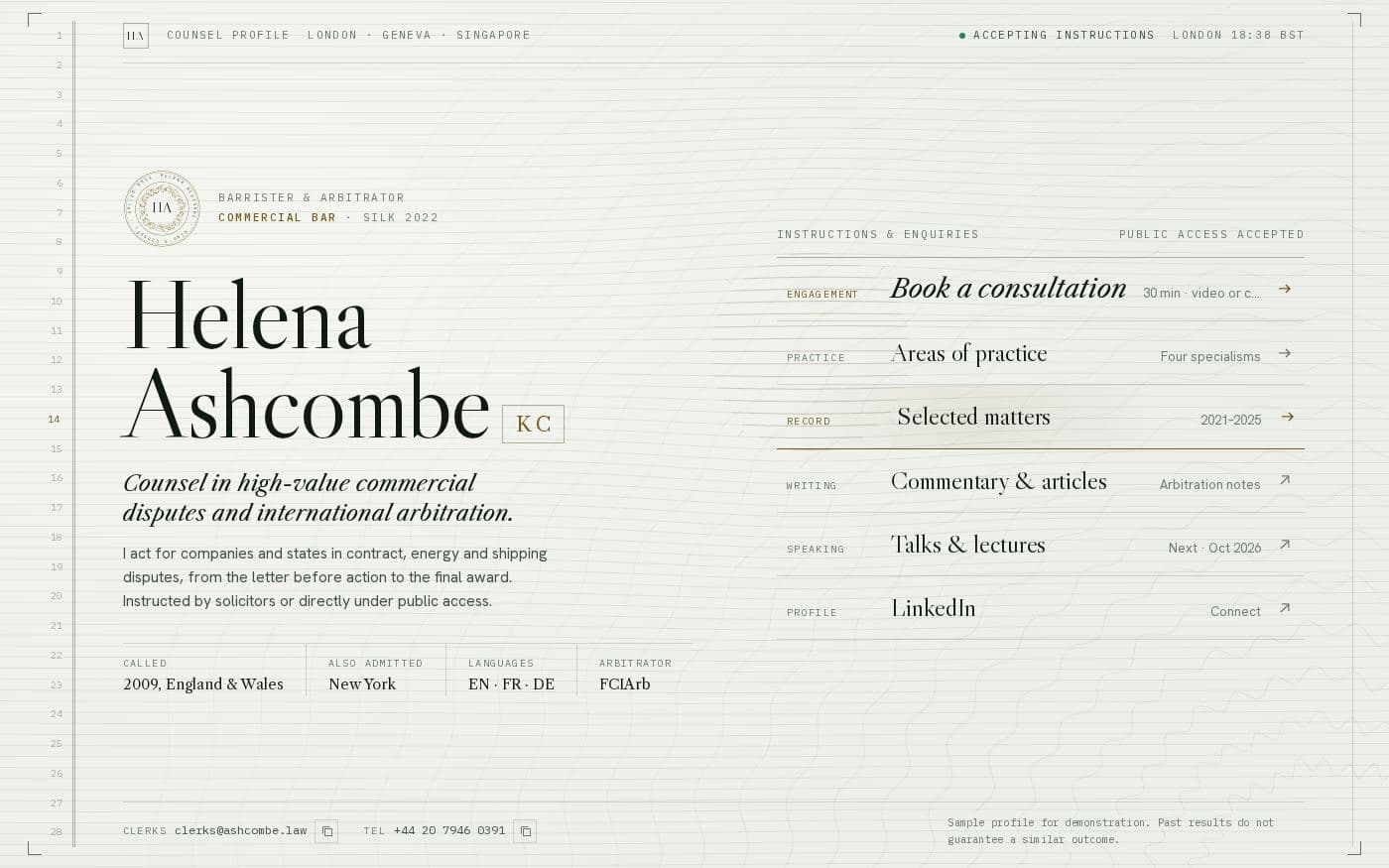
Helena Ashcombe barrister bio page
A counsel profile with the gravity of an engraved certificate: numbered margins, a guilloche seal, and drawers for practice areas, matters and consultations.