I wanted to ask “what's this keyword's difficulty” and get an answer without opening a dashboard.


David, founder of ContextBolt
Scotland
A 99helpers Maker Interview
Conversations with independent makers about how they make, host and market the things they build — and the lessons they learned along the way. See all interviews
Make
Host
Market
The product
ContextBolt
contextbolt.com/seo/
A hosted MCP server that puts live SEO data (keywords, rankings, backlinks, AI visibility) inside Claude, Cursor or whatever agent you use.
01
Who are you, and what did you build?
I'm David, based in Scotland. My background is in growth marketing. I'm currently working freelance and on ContextBolt full time.
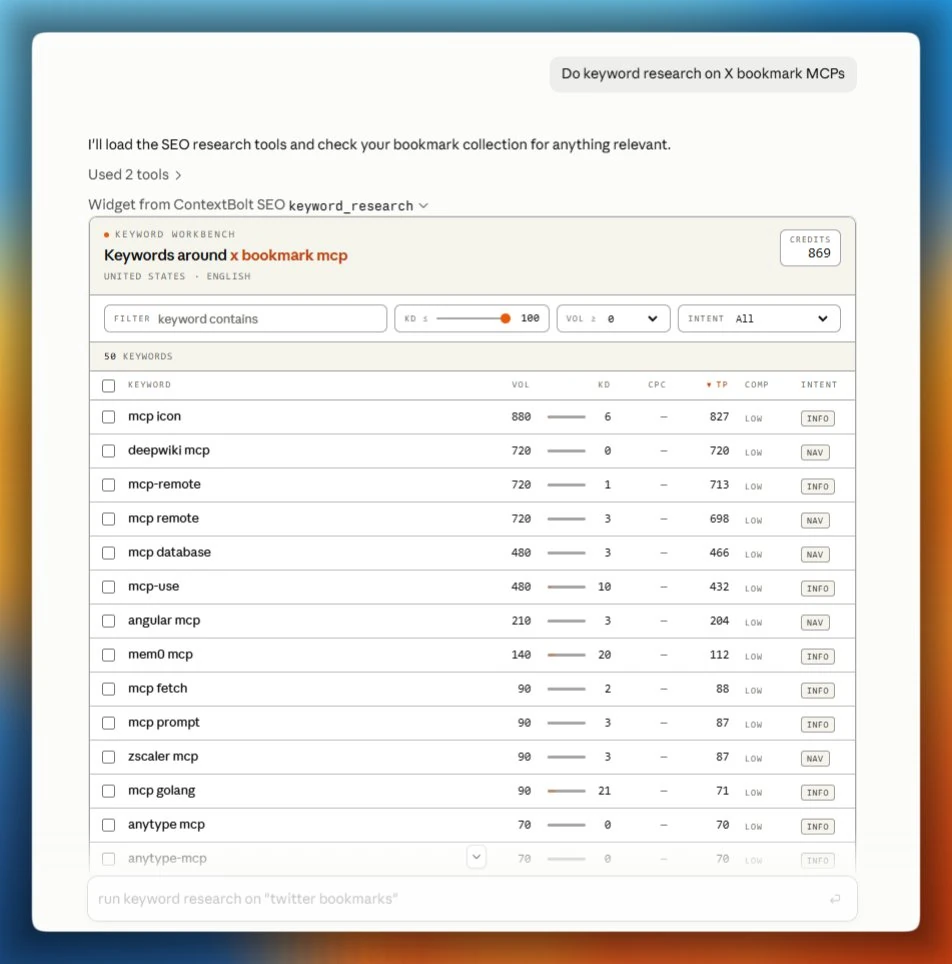
ContextBolt is two products for people who already work inside an AI agent. The first is a Chrome extension that captures your X, Reddit and LinkedIn bookmarks, tags them, and gives your agent an MCP endpoint so it can search them. The second is ContextBolt SEO, a hosted MCP server that puts live SEO data (keywords, rankings, backlinks, AI visibility) inside Claude, Cursor or whatever agent you use. You ask in plain language and it comes back with the numbers.
02
Why did you build it?
The bookmarks tool came first. I had loads of saved posts on X and I never looked at them again. That was a library of knowledge I'd built up myself, and I wanted to put it to use. I figured plenty of other people had the same pile of saves sitting there doing nothing, so I built the extension and it went live on the Chrome Web Store in May 2026.
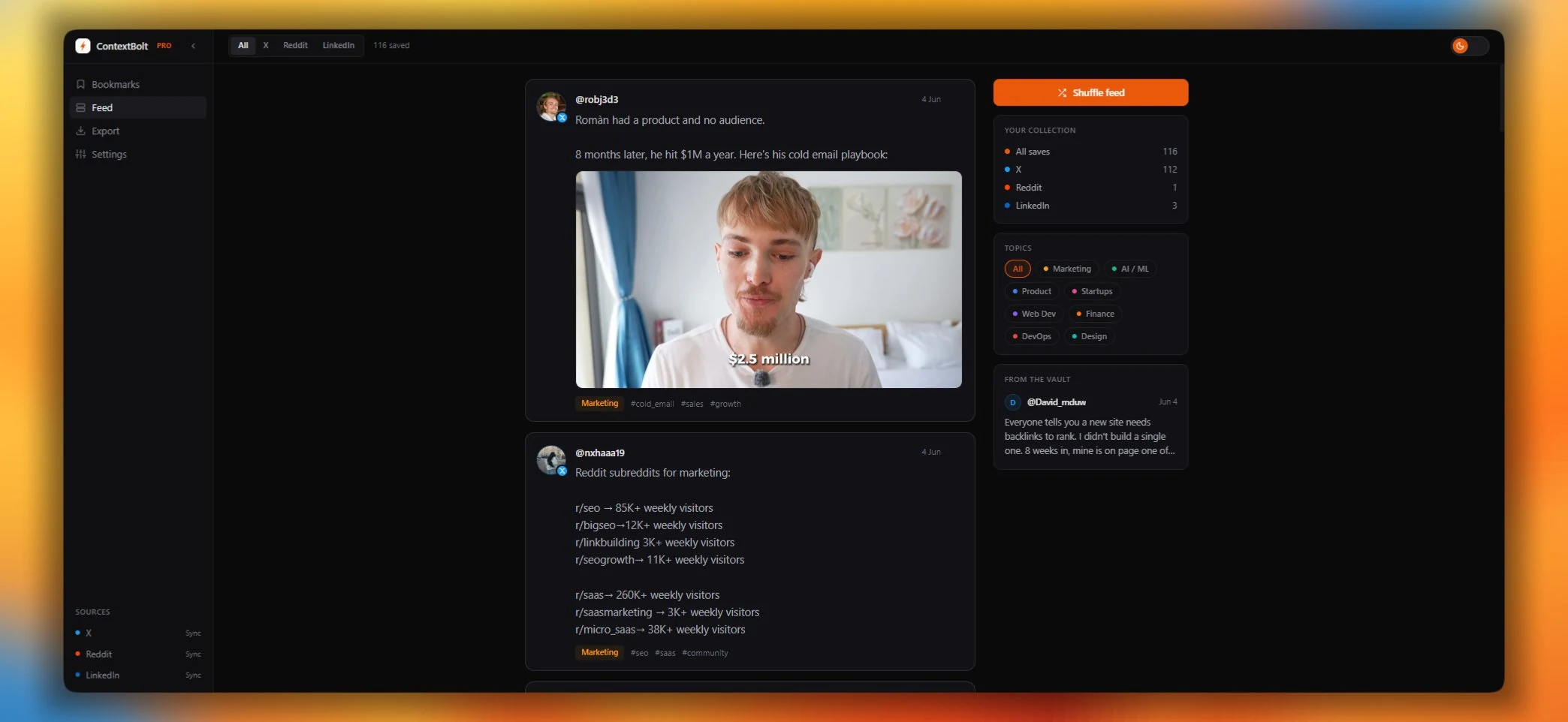
The SEO product came from my own frustration a couple of weeks later. Ahrefs and Semrush are $100 to $450 a month and I used a sliver of the data, now and then. I was already living in Claude Code all day. I wanted to ask "what's this keyword's difficulty" and get an answer without opening a dashboard. So I built that. It launched a couple of weeks after the extension and it now makes up the majority of our revenue.
03
Why should people use your product?
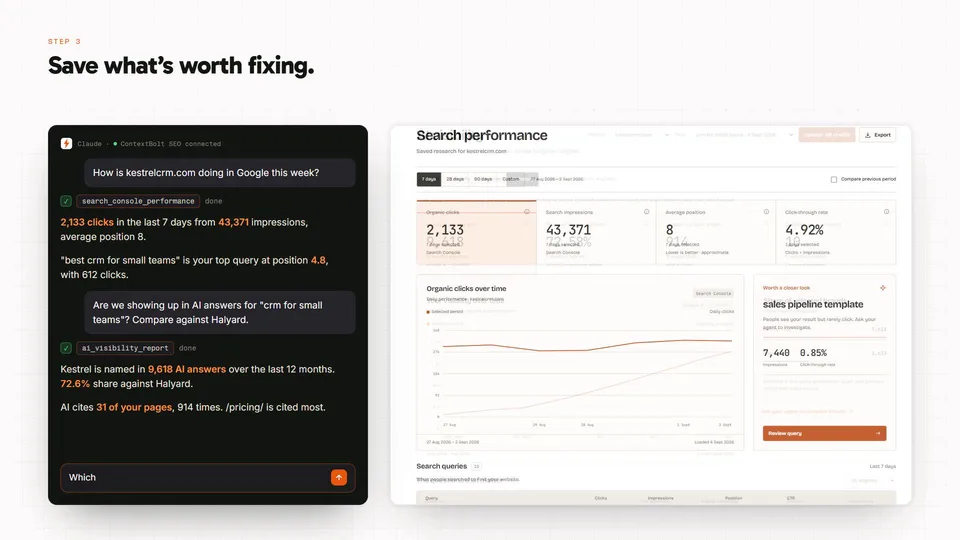
It's for founders, marketers and indie hackers who run their own site, do their own SEO, and won't pay Ahrefs prices for occasional use. The difference is where it lives. You don't learn a new dashboard. You add one MCP server and ask your agent questions. Every result saves to your account, so the research builds up over time instead of disappearing when the chat ends.
“You don't learn a new dashboard. You add one MCP server and ask your agent questions.”
My customers so far are loving it. The thing I hear most is that it doesn't feel like a whole new system to learn. People add it to their Claude config and just start asking for keyword difficulty, SERP overviews and competitor research in the tool they already work in. One customer told me the biggest thing is it cuts out the guessing, because instead of wondering what to chase next he gets a clear direction and turns it into actual pages.
It's $35 a month with a 7-day free trial, so you can see if it works for you before paying anything.
04
How is the business doing today?
I'm still working on all of it alone. Right now a lot of my time goes on fine-tuning the different parts of the business, working on conversion and getting the fundamentals right rather than adding features for the sake of it.
On numbers: I launched in May 2026 at $47 MRR. By the end of June it was around $250, by the end of July around $500, and in September we're at $653 a month and just passed 50 paying users. Small, but it's moving in the right direction every month.
- May 2026
- $47
- End of June
- ~$250
- End of July
- ~$500
- September MRR
- $653
05
What has worked well so far?
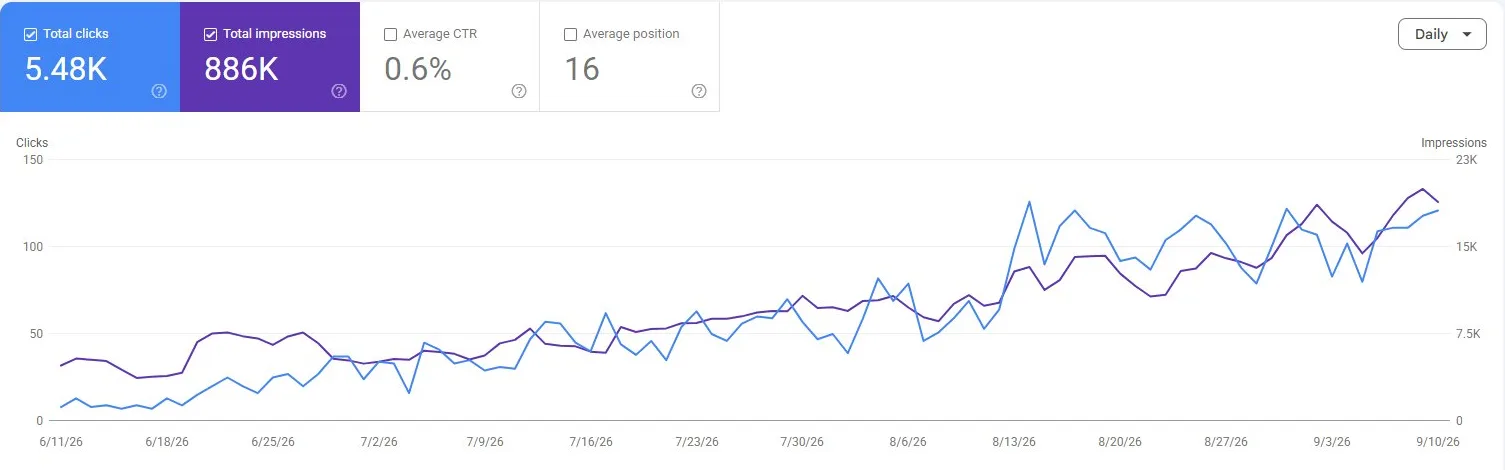
I got some early traction on social. A few posts went semi-viral and that's where the first paying users came from. Since then social has been quieter, but SEO is kicking in and bringing people to the site every day. I use my own product for all of that, which is a nice loop to be in.
The free trial has been the biggest change. It's helped conversions more than anything else, because people get to see the value of the tool up front instead of having to take my word for it.
06
What has been challenging?
Focus. Since launching I've built a few different things, including a meeting coaching tool that got benched early on. I've learned to pick one thing and stick with it.
The bigger challenge is distribution. Building the product is the fun part, and honestly the easy part. Sitting down and doing the distribution work every day is much harder, and it's the thing that actually grows the business.
“Building the product is the fun part, and honestly the easy part.”
The other one is remembering to celebrate the small wins. Especially in the early days, a new subscriber or a nice message from a customer is what keeps you going. It's easy to skip past those and only look at what's not working yet.
07
What are your goals, and what does success look like for you?
The goal is to build the best SEO tool I possibly can. Something a solo founder can actually use, that makes SEO more accessible to people who aren't going to pay for or learn the big enterprise tools. That's the whole idea behind it.
The ultimate number is $10,000 MRR. I want to bootstrap it and run it solo. No funding, no team. My own work, on my own rules, on my own time, and build it up from there.
08
What's your tech stack?
- 01Cloudflare for all the backend.
- 02Astro for the website.
- 03TypeScript and React for the bookmark extension.
- 04DataForSEO is the wholesale data behind the SEO product.
- 05Lemon Squeezy handles billing, Brevo does email, Postiz schedules the social posts.
09
How do you use AI?
AI built the product. Most of my work runs through Claude Code or Codex, connected to everything else through MCPs, and I run two machines through Tailscale with T3 Code so I can work from either. Beyond code, AI does the socials, the graphics and most of the content pipeline. I even built my own analytics dashboard with it, so I can see exactly where visitors come from and what turns into a sale, without paying for another tool.
AI is also the product. Both ContextBolt products are MCP servers. They only exist because people now do real work inside an agent and want their data there too.
10
What advice would you give someone who wants to build something of their own?
Start small. Pick a small use case, a problem you have yourself or one you've seen someone complaining about on Reddit, and solve that first.
I know it's a cliché but get people to try your product and give you feedback, especially in the early days. That feedback is invaluable.
Keep going. Keep posting every day. Work on your SEO early, it's worked wonders for me.
And once you've found something that people are willing to pay for, double down on it. Keep pushing forward on that one thing and try not to waste your time on anything that isn't bringing in money.
11
Any resources you'd recommend?
Take inspiration from indie hackers like Marc Lou and Pieter Levels. Watch what they're posting about, because a lot of the time they're ahead of the trends.
And listen to podcasts from people at the leading AI labs. They'll often talk about what's coming next or how they're working with AI day to day, and that's a big head start.
12
Where can people find you?
You can find me on X at @David_cbolt. You can also check out the website and the product at www.contextbolt.com/seo
13
Anything else?
If you want a free SEO audit, head over to our website. You don't need to enter your email or anything. Put your domain in and you get the information for free.
And to anyone reading this thinking about starting, just go for it. Right now you can build almost anything, so get your head down and get to work.
At a glance
- Founder
- David
- Based in
- Scotland
- Launched
- May 2026
- Team
- Solo, bootstrapped
- Products
- ContextBolt SEO, ContextBolt Bookmarks
- Pricing
- $35/month, 7-day free trial
- Works in
- Claude, Cursor or any agent
- MRR (Sept 2026)
- $653, 50+ paying users
Are you a maker?
Tell us how you make, host and market what you build.
We feature independent makers and small teams — the wins, the mistakes and the lessons in between. If you've shipped something, we'd like to hear about it.