Building it was the easy half; getting noticed is the actual work.

Igor Tverdokhleb, founder of HansaChat
Lübeck, Germany
A 99helpers Maker Interview
Conversations with independent makers about how they make, host and market the things they build — and the lessons they learned along the way. See all interviews
Make
Host
Market
The product
HansaChat
hansa.chat
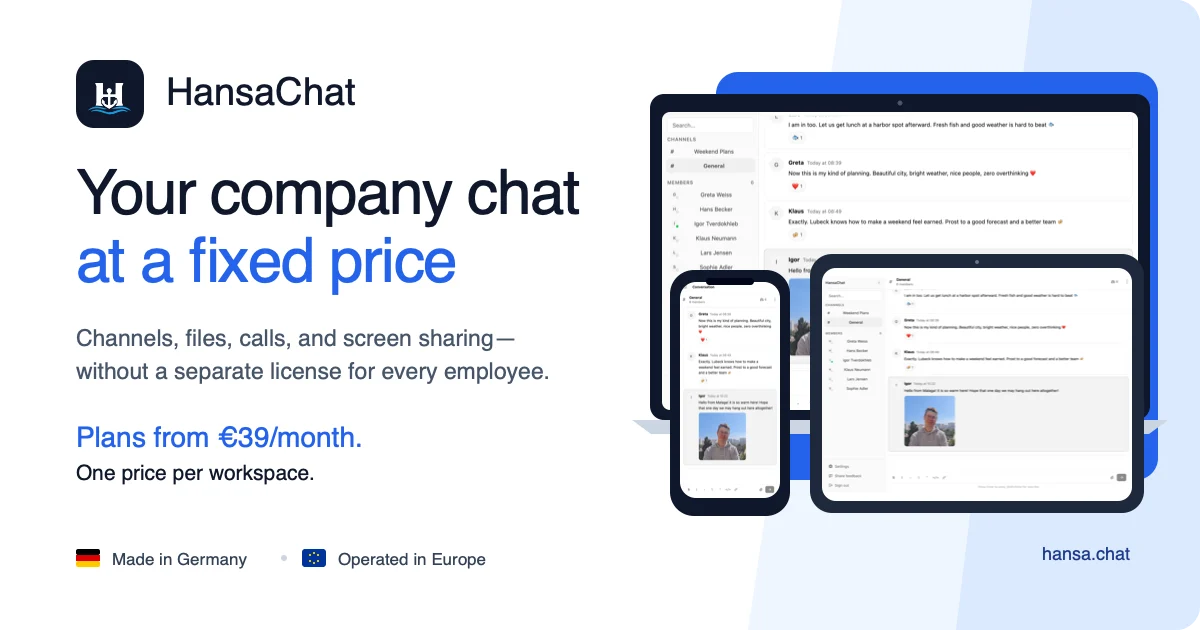
EU-based company chat for the whole team, at one fixed workspace price.
01
Who are you, and what did you build?
I'm Igor Tverdokhleb, a software engineer based in Lübeck, Germany. Born in the Soviet Union. I moved to Germany many years ago, worked as a Software Engineer with a focus on backend and Platform Engineering.
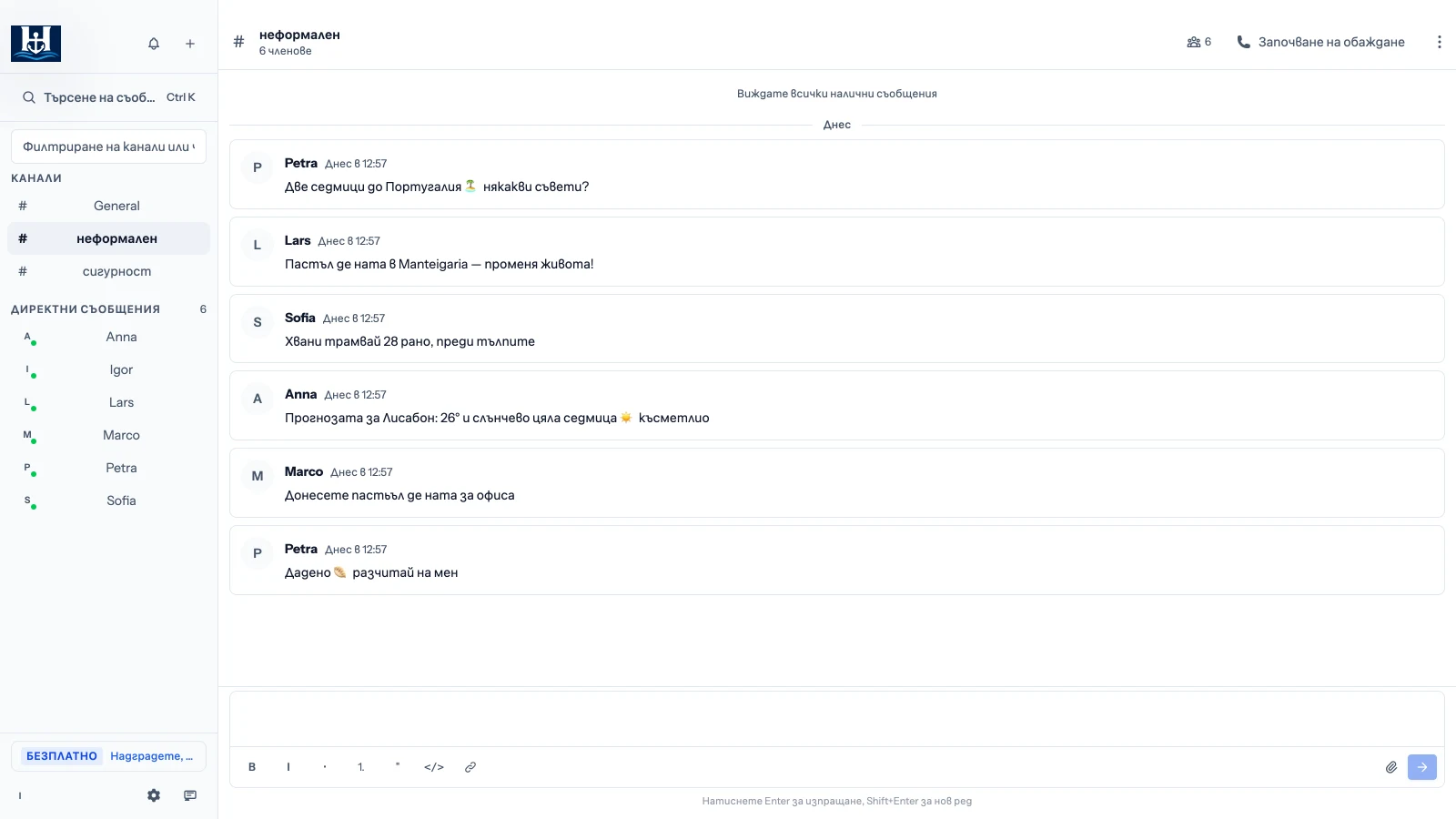
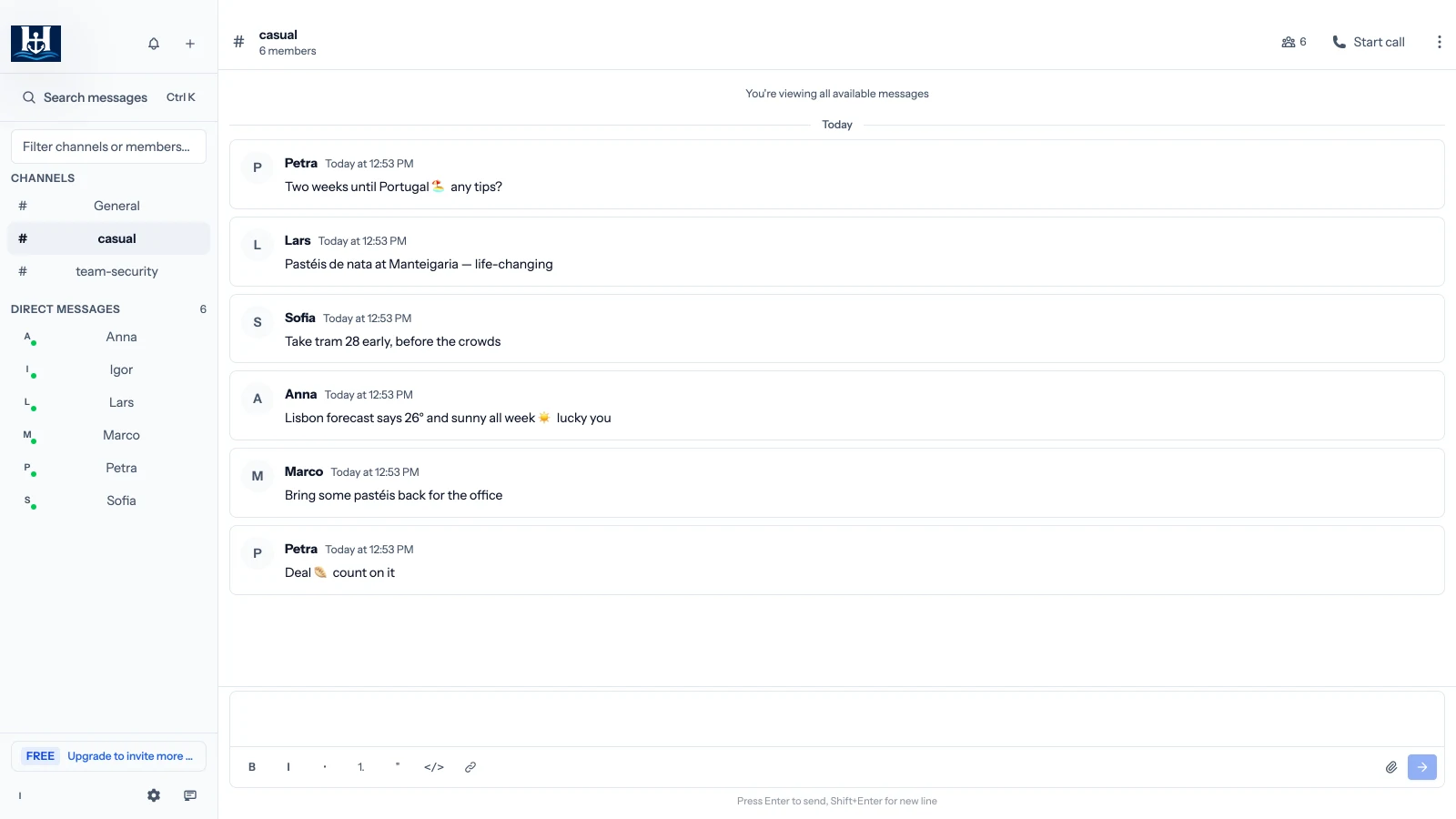
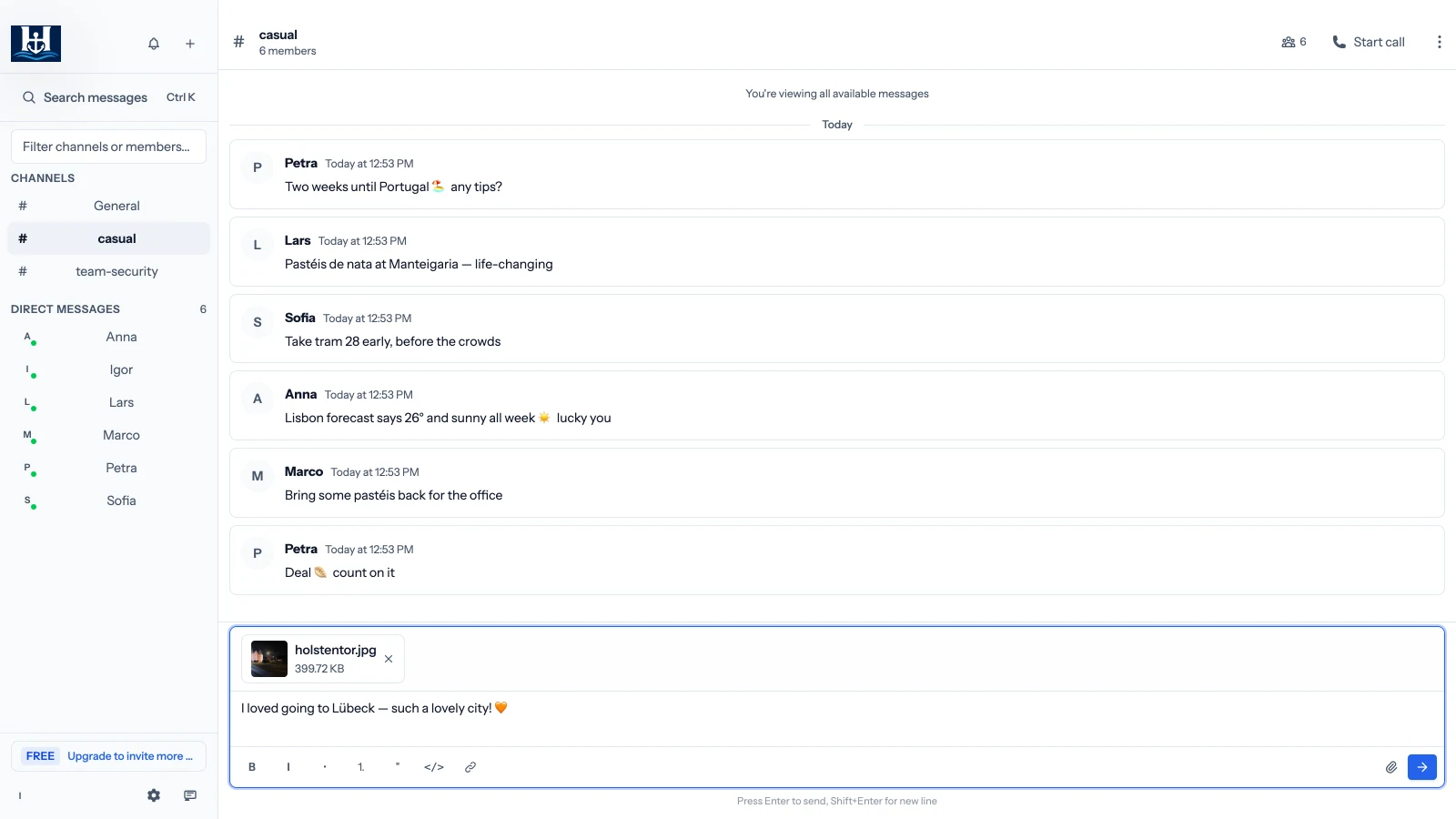
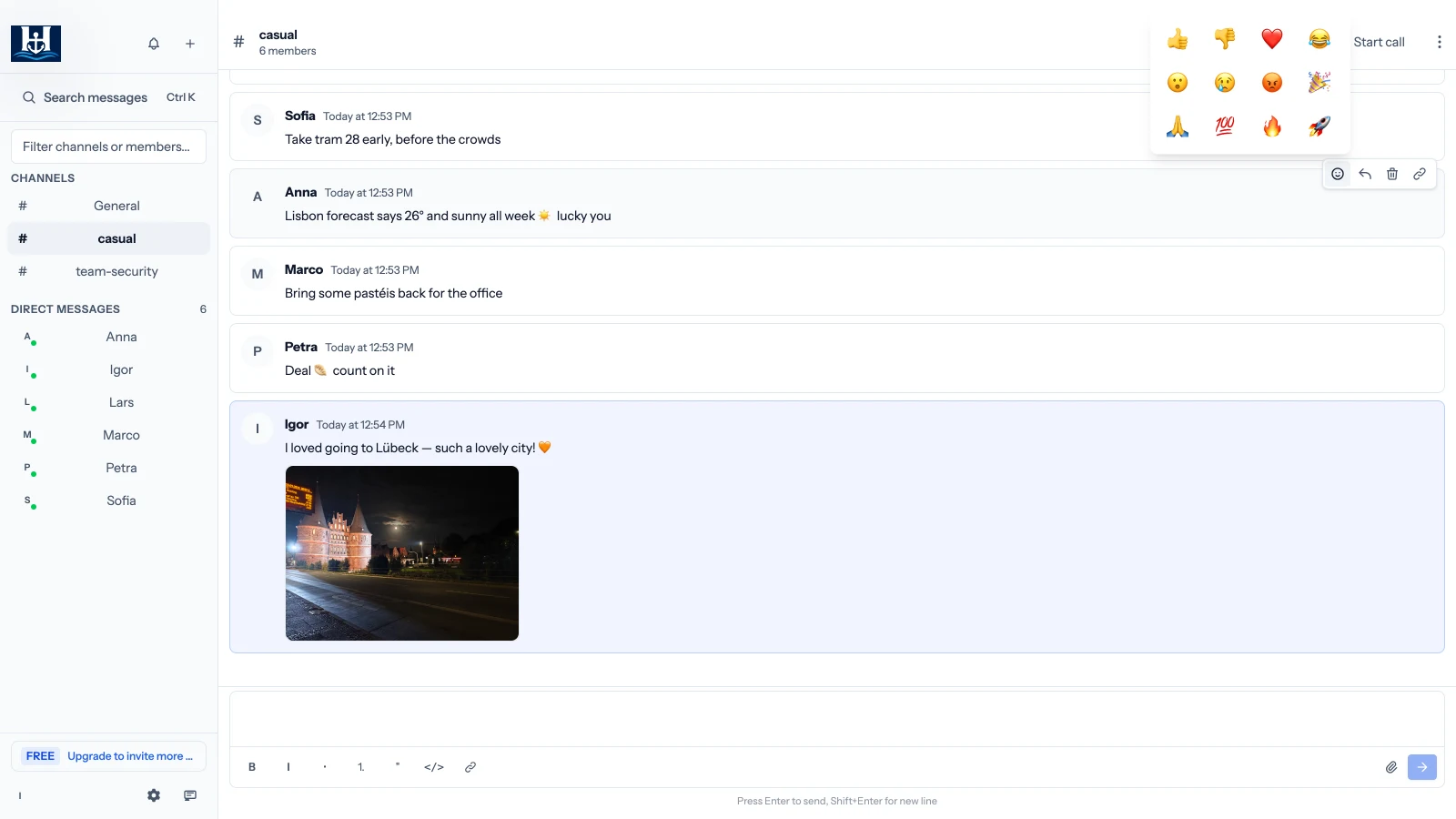
I built HansaChat (hansa.chat) — an EU-based company chat for internal team communication. Channels, direct messages, files, audio/video calls, screen sharing, Google SSO, webhooks, and workspace administration. The whole company shares one workspace at a fixed price instead of per-user seats. It's developed in Germany, hosted on IONOS Cloud in Germany, and available in 20+ languages on web, desktop, and mobile.
02
Why did you build it?
Three frustrations kept coming up.
First, pricing: Slack and Teams bill per user, so for a company with 50 employees, “let's put everyone on chat” turns into a license calculation every time someone new starts. Especially when this person is not working full time. Imagine the taxi park — 1000 employees. 20 euro each — crazy bill. But 980 employees are not working today. Or maybe a company that works in deliveries — either goods or food or service (e.g. cleaning) — lots of employees but not everyone is working full-time and/or today.
Second, where the data lives: a lot of EU businesses I spoke with want a genuinely European operator — a company based and accountable in the EU — not a US vendor that merely offers an EU hosting region.
“HansaChat offers SSO even on the free plan and it will never be behind any expensive tier.”
Third, security. If you want to enable SSO — which I find quite a basic platform safety requirement — you have to pay for the enterprise plan. The enterprise plan is normally 2.5x more expensive. HansaChat offers SSO even on the free plan and it will never be behind any expensive tier.
The problems had half-solutions but no product combined them cleanly for small and mid-sized businesses, so I started building in February 2026 and never stopped.
03
Why should people use your product?
It is offering predictable cost and predictable data handling. HansaChat is designed as a simple company chat that doesn't need a PhD to start using it. One fixed workspace price covers everyone — the founding-customer price starts at €39/month billed annually.
There's also a free plan with 10 users and 1 GB storage if you want to try it properly. Everything is stored and processed in Germany.
04
How is the business doing today?
Early and honest: solo founder, bootstrapped, no external funding, launched in 2026. The product itself is broadly complete — messaging, calls, billing, web plus desktop plus mobile apps, backups, legal framework — and I'm at the stage of turning that into paying customers. Right now the focus is on distribution. There are too few customers yet to say something solid.
05
What has worked well so far?
A sharp position does most of the work. “EU-first company chat at a fixed workspace price” is easy to explain in one sentence, and the current European push for digital sovereignty gives that message wind. The economic downturn is actually also playing for me — companies are looking for options to save on tools.
06
What has been challenging?
Being one person building the technical stack and marketing/distribution at the same time. The harder-than-expected part was everything around the product: development, positioning, legal, GDPR documentation. And distribution: building it was the easy half; getting noticed is the actual work.
07
What are your goals, and what does success look like for you?
Near term
Independent security audit and having more paying customers as proof that fixed workspace pricing works as a business model.
Middle term
ISO 27001 certification (in active preparation) and steady organic growth in the EU region.
Long term
A sustainable, bootstrapped company with 10–20 employees who help me to provide high-quality services.
Success, plainly: a few hundred businesses run their internal chat on HansaChat, it pays my bills, and I still ship code myself.
08
What's your tech stack?
- 01Go backend with ConnectRPC, NATS for async work, Centrifugo for realtime, and a separate MariaDB database per tenant.
- 02Laravel/PHP powers the landing website, billing, and workspace provisioning.
- 03The chat frontend is Vue 3 + Pinia, delivered as a web app and wrapped with Tauri for Windows, macOS, Linux, iOS, and Android.
- 04Calls run on the self-hosted open-source solution.
- 05All runs on Kubernetes at IONOS Cloud in Germany. In 3 regions with 2+ pods for each service. Ready to scale to 10,000 customers already today.
- 06Bunny CDN (EU) in front and encrypted Restic backups in Frankfurt and Stockholm.
- 07A huge Playwright E2E suite gates every release. Hardest part technically: realtime + calls + tenant isolation at the same time.
09
How do you use AI?
Heavily — as the build crew.
I planned infrastructure on my own — every field in the database was thought through and hand-crafted. I planned the chat app architecture. I planned how apps are talking to each other. Both are written down in core-concept.md and drive the work of the AI.
AI coding agents helped me write the backend, frontend, tests, docs, and deployment automation; as a solo founder that's the difference between an idea and a shipped product.
AI is also in my marketing pipeline: e.g. the product walkthrough videos are assembled with AI-generated presenters and synthetic voiceovers in multiple languages. I simply cannot record 20+ languages on my own — I speak only 3 languages! I also manage ads with the help of AI — nobody else is able to understand Google interfaces.
“As a solo founder that's the difference between an idea and a shipped product.”
But AI is deliberately not the product itself — HansaChat is a communication tool, and I didn't want to bolt “AI” onto the positioning. I may also think about the BYOK concept if there is demand for AI inside the chat, but the solution was deliberately built for humans, not for AI. AI may still use it though, via the CLI tool.
10
What advice would you give someone who wants to build something of their own?
Don't give up after 1–2 months. It took me 6 months ONLY to build it. You can't build a business in a month. It all takes time.
11
Any resources you'd recommend?
Nothing specifically. Just join X — the best platform for builders!
12
Where can people find you?
At a glance
- Founder
- Igor Tverdokhleb
- Based in
- Lübeck, Germany
- Building since
- February 2026
- Team
- Solo, bootstrapped
- Pricing
- One fixed workspace price, from €39/month
- Free plan
- 10 users, 1 GB storage
- Hosted on
- IONOS Cloud, Germany
- Languages
- 20+
Are you a maker?
Tell us how you make, host and market what you build.
We feature independent makers and small teams — the wins, the mistakes and the lessons in between. If you've shipped something, we'd like to hear about it.